PPC vs SEO: Which Strategy Should Derby Startups Prioritise First?
Table of Contents
Building a Strong Online Presence for Your Startup
Google Ads or SEO…or maybe both
Having a visible, well-structured website is no longer optional—it’s essential. Whether you’re a startup operating from a co-working space in the city centre or launching a local service from Allestree or Mickleover, the first place your customers are likely to find you is online.
At Peak District SEO, we specialise in SEO and Google Ads support for Derby startups, helping new businesses grow through tailored, results-driven strategies. But which digital approach is right for you: SEO or paid ads? Let’s explore.
What Is SEO and Why Does It Matter?
Search Engine Optimisation (SEO) is the ongoing process of improving your website so it ranks better on Google and other search engines. It’s a vital part of any digital marketing strategy, especially for businesses aiming to build trust and visibility over time.
Key Benefits of SEO
Organic Visibility SEO helps your site appear in organic (non-paid) search results, especially in local searches across areas like Littleover or Oakwood, where more people are searching for nearby services.
Cost-Effective Over Time Once your website ranks well, traffic is essentially free—making SEO highly cost-effective for startups in the long run.
Improved User Experience Good SEO improves website structure, loading speed, and mobile responsiveness—essential for keeping visitors engaged.
Trust and Authority High-ranking sites are perceived as more credible, especially when paired with strong Google reviews and relevant local content.
That said, SEO isn’t instant. It’s a long-term game that requires consistent effort, content creation, and technical improvements.
What Are Google Ads?
Google Ads, also known as PPC (Pay-Per-Click), is a form of paid advertising that allows you to appear at the top of Google almost instantly. For startups in places like Sinfin or Darley Abbey looking to hit the ground running, it can be a powerful way to generate quick leads.
Why PPC Works for Startups
Immediate Results Ads can be live and generating traffic within hours. Perfect for testing demand or launching a new product in areas like Markeaton or Findern.
Precise Targeting Segment your audience by postcode, interest, search intent, and even device, ensuring you’re only paying for clicks that matter.
Data-Driven With tools like Google Analytics and Search Console, you’ll see what works and what doesn’t, down to the last pound.
However, PPC isn’t cheap. Without well-optimised landing pages or proper targeting, your advertising budget can be spent fast with little return.
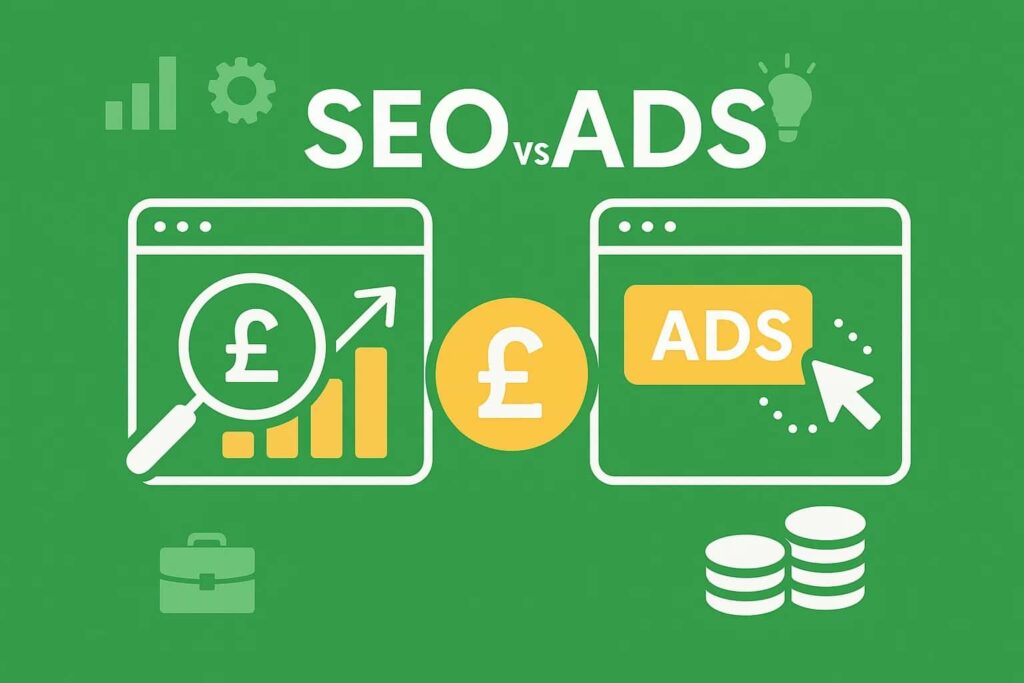
SEO vs Ads: Which One Is Better?
Factor
SEO
Google Ads
Cost
Time and content investment
Pay-per-click + management fees
Speed of Results
Takes 3–6 months to see traction
Immediate
Long-Term Benefit
Builds sustainable organic traffic
Ends when you stop paying
Best For
Building brand and trust
Testing offers and fast lead generation
The Hybrid Approach: SEO vs Ads or Best of Both Worlds
We often recommend a hybrid strategy for startups. Start with Google Ads to get initial traffic and leads while your SEO strategy begins to take hold. As your organic traffic grows, you can scale back ad spend or redirect it towards more competitive campaigns.
For example, a Derby startup based in St Luke’s might run PPC campaigns around a specific service launch while gradually building blog content and local landing pages to support organic rankings in the months ahead.
It’s all about balance and what works best for each individual company. Budget matters and timescales need to be realistic and considered.
FAQs For Derby Startups
What is the role of SEO in supporting local startups? SEO builds long-term visibility in organic search, helping businesses attract more traffic without ongoing ad spend.
How can an SEO agency help with visibility? An experienced agency will optimise your site technically, create relevant content, and build backlinks—all tailored to your sector and audience.
Is it better to start with ads or SEO? Ads work immediately; SEO takes time. SEO secures the long term whilst ads give you a quick boost whilst you grow your brand. Startups often benefit from using both to cover short- and long-term needs.
Can I get a Free SEO Audit for my startup? Yes. We offer a no-obligation SEO audit to identify quick wins and long-term strategies to help you grow.
Get Tailored Advice on SEO vs Ads for Your Derby Business
Want clarity on whether SEO or Ads will deliver the best return? At Peak District SEO, we help local startups in Derby and nearby areas succeed online with bespoke SEO and PPC strategies. Contact us now for a Free SEO Audit or tailored marketing consultation.
I’m Phil Gregory, the MD and founder of Peak District SEO.
I’m an SEO & Google Ads Consultant with 28+ years of experience in I.T and helping UK Businesses improve website performance.
I built my first website in 1998, then I discovered the joys of website optimisation and never looked back.
If you want a no-nonsense, no-hard-sell approach and to actually get your website fixed with a solid, affordable, long-term approach, hit the contact button today.
Peak District SEO is a UK-based Digital Marketing Company.
We help businesses make more money, using traditional Search Engine Optimisation (SEO) , Ai Search / GEO and paid advertising (PPC).
Why Peak District SEO?
27+ years of experience.
80+ 5* reviews on Google
Our customers have hundreds of page one and position 1 rankings, and we can prove it.
We’ve helped hundreds of SMEs in the UK
We have numerous articles published across the web discussing SEO.
We regularly publish case studies about the work we’ve done
Customers trust our service – See our reviews on Google, Trustpilot and Facebook
Our customers have hundreds of page one and position 1 rankings and we can prove it.
Thanks for taking the time to read this article. We hope you found it helpful.
If you need a little more guidance, just book a free website review or call to tell us about your website. We’re ready to help!
Find out how our SEO services could improve your business. Simply complete the form below and we will arrange a time for a call. We think friendly chats are better than long, confusing, technical emails.