Ecommerce site architecture is the way an online store is planned, built and organised. It affects how users move through your website. It also affects how search engines find, crawl and rank your pages.
A strong structure helps customers find products quickly. It also supports faster loading times, clearer navigation and a smoother checkout process.
At Peak District SEO, we help ecommerce businesses improve website structure, SEO performance and customer experience. A better structure can make your store easier to use and easier to rank.
A key part of this is the customer experience. If your website is hard to use, people are more likely to leave before buying.
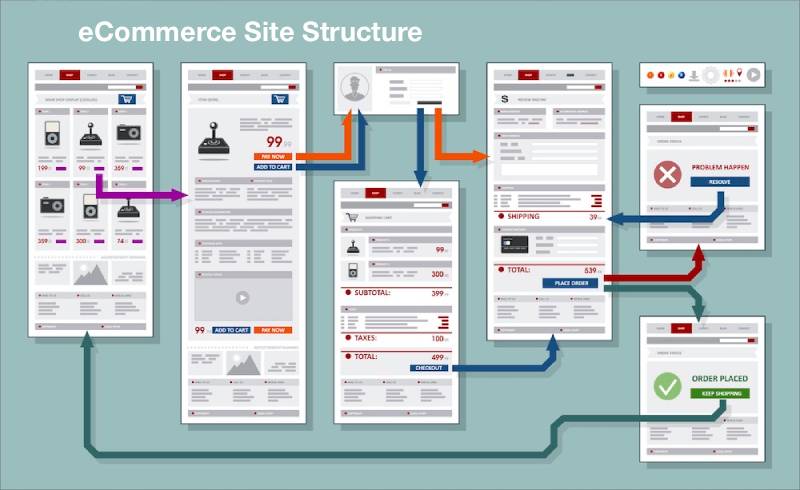
What is ecommerce site architecture?
Ecommerce site architecture is the framework behind your online shop. It covers your menus, categories, product pages, checkout, database and backend systems.
Good architecture helps users and search engines understand your website. It also makes your store easier to manage as it grows.
- Users can find products faster.
- Search engines can crawl pages more easily.
- Product categories become clearer.
- Checkout feels simpler.
- The website can handle more traffic.
Core parts of an ecommerce website structure
A modern ecommerce website has several important parts. Each one has a clear job.
- Front end: The part users see, including menus, pages, buttons, images and product filters.
- Application layer: The part that manages functions such as checkout, payments and user accounts.
- Backend system: The part that handles products, stock, orders and customer data.
- Database: The place where product information, orders and user records are stored.
- Integrations: Tools such as payment gateways, CRM systems, shipping tools and marketing platforms.
When these parts work well together, the whole ecommerce website feels faster and easier to use.
Common types of ecommerce architecture
There are several ways to build an ecommerce website. The right choice depends on your business, budget, products and growth plans.
Monolithic ecommerce architecture
A monolithic ecommerce website keeps the main parts of the site in one system. This can be simple to manage at first. However, it may become harder to scale as the business grows.
Three-tier ecommerce architecture
Three-tier architecture separates the website into three main layers:
- The customer-facing layer
- The application layer
- The data layer
This makes the website easier to manage, improve and scale over time.
Headless ecommerce architecture
Headless ecommerce separates the front end from the backend. This gives businesses more control over design, speed and user experience.
It can work well for larger ecommerce stores, complex product ranges and brands that need more flexible content delivery.
Microservices architecture
Microservices allow different parts of the website to work as separate services. For example, payments, search, stock control and shipping can all run through different tools.
This can make the website more flexible. It can also make future updates easier.
Why ecommerce site architecture matters for SEO
Search engines need to understand your website before they can rank it well. A clear structure helps Google find your most important pages.
Good ecommerce architecture can improve:
- Category page rankings
- Product page visibility
- Internal linking
- Indexing
- User engagement
- Organic traffic
Clear URL structures, useful category pages and strong internal links all help search engines understand your store.
How better structure improves the customer journey
A good ecommerce structure helps people move from the landing page to checkout with less friction.
Customers should not have to keep pressing the back button. They should not have to guess where products are. The journey should feel simple from the first click.
A better structure can help reduce:
- Confusion
- Cart abandonment
- Poor mobile experience
- Slow product discovery
- Lost sales
It can also increase trust. When a website is easy to use, customers are more likely to stay and buy.
Basic tips for building a better ecommerce website structure
Before choosing a platform or redesigning your store, look at how users shop. Think about what they search for, how they compare products and what they need before buying.
Useful steps include:
- Research your main product categories.
- Group similar products together.
- Use short and clear menu labels.
- Create simple URL structures.
- Link from category pages to key products.
- Make filters easy to use.
- Keep checkout simple.
- Review pricing, offers and competitor activity.
You can have a strong website and good ecommerce SEO, but pricing still matters. If competitors offer better prices, clearer delivery or stronger trust signals, your website may lose sales.
Why UI and UX matter in ecommerce architecture
User interface, often called UI, is what the customer sees. User experience, often called UX, is how the website feels to use.
Both are important. Clear menus, helpful filters and simple product pages make shopping easier.
A strong ecommerce UX should include:
- Clear navigation
- Fast loading pages
- Simple product filters
- Helpful product information
- Visible calls to action
- A smooth basket and checkout process
- Mobile-friendly design
An ecommerce website must work well on desktop and mobile. Mobile shopping is now a major part of ecommerce, so mobile performance cannot be ignored.
Optimising ecommerce architecture for search engines
SEO should be considered during the planning stage. It should not be added after the website is built.
Important SEO areas include:
- Clear category hierarchy
- Helpful product descriptions
- Strong internal linking
- Clean URLs
- XML sitemaps
- Fast page speed
- Mobile usability
- Useful blog content
Businesses should also use Google Analytics and Google Search Console to review performance. This helps you see which pages drive traffic, sales and enquiries.
Using third-party tools and plugins
Many ecommerce websites use third-party tools. These tools can support payments, stock control, delivery, email marketing and customer management.
Common integrations include:
- Payment gateways
- CRM systems
- Stock management tools
- Shipping platforms
- Email marketing tools
- Product review systems
- Analytics platforms
These tools should be chosen carefully. Too many plugins can slow a website down. Poor integrations can also create technical problems.
Why mobile responsiveness helps ecommerce sales
Mobile responsiveness means your website adjusts properly to different screen sizes. This is vital for ecommerce websites.
Mobile users need pages that load quickly. They also need clear buttons, simple filters and an easy checkout.
A mobile-friendly ecommerce website can help improve:
- Customer satisfaction
- Search visibility
- Product browsing
- Checkout completion
- Repeat visits
Fast content delivery tools can also help larger ecommerce stores serve users in different locations.
Continuous improvement and ongoing optimisation
Ecommerce websites need regular improvement. Customer behaviour changes. Competitors change. Search engines also change.
Your ecommerce architecture should be reviewed often. Look at navigation, speed, rankings, checkout performance and product page quality.
Regular improvements can help your store stay competitive and support long-term growth.
Peak District SEO helps ecommerce businesses improve structure, navigation and search visibility. When technical structure and user experience work together, the website becomes stronger and easier to grow.
FAQs
What is ecommerce website architecture?
Ecommerce website architecture is the structure of an online store. It covers categories, product pages, navigation, checkout, backend systems and data.
Why does ecommerce architecture matter?
It helps users find products and helps search engines understand your website. A better structure can improve traffic, rankings and sales.
What is three-tier ecommerce architecture?
Three-tier architecture separates the website into the customer layer, application layer and data layer. This can improve performance and scalability.
Can microservices be used with an existing ecommerce website?
Yes. Microservices can add new features without rebuilding the whole website. They are often used for payments, search, stock and delivery tools.
How has mobile shopping changed ecommerce website design?
Mobile shopping has made speed, simple layouts and responsive design more important. Customers expect ecommerce websites to work smoothly on phones.
What are the benefits of WordPress WooCommerce?
WordPress WooCommerce offers flexible design, useful plugins and simple management tools. It is a strong choice for many growing ecommerce businesses.
How does a content management system support ecommerce architecture?
A content management system helps manage products, blog posts, landing pages and promotions. It keeps content organised and easier to update.
Contact Peak District SEO
Improve your ecommerce site architecture today
If you want a better ecommerce website that is easier to use, easier to manage and better placed to rank, visit our contact page or speak with Peak District SEO.
Related articles
- Why We Recommend WooCommerce for Small Online Shops
- PPC Campaign Management Best Practices for Ecommerce
- How Ecommerce Web Agencies Drive Growth
- A Comprehensive Ecommerce SEO Strategy
- Clicks to Conversions: How SEO Drives Ecommerce Growth
- Case Study: Wooden Furniture Shop and Ecommerce Marketing

I’m Phil Gregory, the MD and founder of Peak District SEO.
I’m an SEO & Google Ads Consultant with 28+ years of experience in I.T and helping UK Businesses improve website performance.
I built my first website in 1998, then I discovered the joys of website optimisation and never looked back.
If you want a no-nonsense, no-hard-sell approach and to actually get your website fixed with a solid, affordable, long-term approach, hit the contact button today.
Peak District SEO is a UK-based Digital Marketing Company.
We help businesses make more money, using traditional Search Engine Optimisation (SEO) , Ai Search / GEO and paid advertising (PPC).
Why Peak District SEO?
27+ years of experience.
80+ 5* reviews on Google
Our customers have hundreds of page one and position 1 rankings, and we can prove it.
We’ve helped hundreds of SMEs in the UK
We have numerous articles published across the web discussing SEO.
We regularly publish case studies about the work we’ve done
Customers trust our service – See our reviews on Google, Trustpilot and Facebook
Our customers have hundreds of page one and position 1 rankings and we can prove it.