The Complete Guide to Tracking Metrics that Actually Matter
At Peak District SEO, we work with businesses every day that are overwhelmed by data. They have dashboards full of numbers, reports piling up, and still no clear answer to the most important question: is our SEO actually working? That confusion almost always comes down to the same root problem: tracking the wrong SEO metrics.
This guide cuts through the noise. We will show you exactly which SEO measurement metrics matter, why they matter, and how they connect to real business results. Whether you are new to search engine optimisation or running a mature digital strategy, this is the resource you have been looking for.
What Are SEO Measurement Metrics and Why Do They Matter?
SEO measurement metrics are the quantifiable data points used to evaluate the performance, progress, and effectiveness of your search engine optimisation efforts. They range from high-level indicators such as organic traffic and keyword rankings, through to granular signals like Core Web Vitals, engagement rate, and organic conversion rate.
Without the right metrics in place, you are essentially flying blind. You cannot improve what you cannot measure, and you certainly cannot prove the value of your SEO investment without clear, consistent performance indicators. Good SEO monitoring is not a luxury; it is the foundation of any successful SEO strategy.
The challenge, of course, is knowing which metrics to prioritise. Many businesses fall into the trap of chasing vanity metrics that look impressive in a report but do not reflect meaningful business outcomes.
At Peak District SEO, our approach is built around focusing on the metrics that matter, connecting search performance directly to measurable growth and tangible business outcomes.
The Core Categories of SEO Performance Metrics
A well-structured SEO campaign organises metrics into clear categories. Each category captures a different dimension of your website’s SEO performance, and together they paint a complete picture of your digital success.
1. Organic Traffic and Search Visibility
Organic traffic is the number of users arriving at your site through unpaid search engine results. It is measured through analytics platforms such as Google Analytics, and it is one of the most fundamental SEO KPIs available. Tracking your website’s organic traffic over time reveals whether your content and technical improvements are gaining traction in Google’s search results and on various search engines.
Search visibility goes further, measuring how often your site appears in search engine results pages (SERPs) for your targeted keywords. A site can receive reasonable traffic while still being largely invisible for its most important terms. That is why organic impressions and search performance data from Google Search Console should always be reviewed alongside raw traffic figures.
At Peak District SEO, we track organic search performance at both the page and domain level, giving clients a clear view of which content is driving the most visibility and where opportunities for growth exist.

2. Keyword Rankings and SERP Tracking
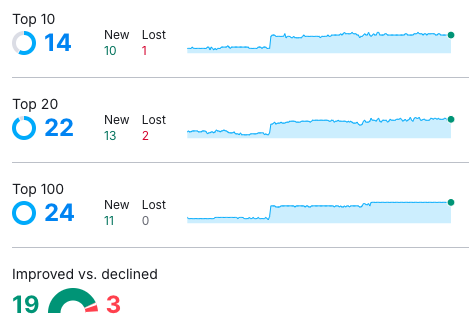
Keyword rankings remain one of the most closely watched SEO performance metrics, and for good reason. Achieving the top three positions for your most valuable search terms has a direct impact on organic click-through rate and, ultimately, revenue.
However, search engine rankings should never be reviewed in isolation. A site can rank well for low-volume or less competitive keywords without generating meaningful traffic or conversions. The smarter approach is to Track SERP positions for a carefully chosen mix of high-intent, relevant keywords aligned with your customer journey.
We recommend using tools such as Screaming Frog SEO Spider and dedicated rank tracking platforms to monitor your site’s rankings consistently over time. Shifts in search engine rankings often signal changes in search engine algorithms or movements in the competitive landscape, both of which require prompt attention.
3. Click-Through Rate (CTR)
The click-through rate (CTR) measures how often users click your listing after seeing it in Google’s search results. A low CTR on a high-ranking page is a warning sign; it usually means your title tags or meta descriptions are not compelling enough, or that zero-click searches are reducing the incentive to click through.
Improving your organic click-through rate does not require climbing the rankings; it requires smarter copywriting and a deeper understanding of search intent. Peak District SEO audits organic click-through rate as part of every campaign performance review, identifying pages where small copy improvements can deliver significant traffic gains.
4. Conversion Metrics and SEO ROI
This is where SEO connects most directly to business value. The organic conversion rate measures the proportion of organic visitors who complete a desired action, whether that is submitting an enquiry, making a purchase, or signing up for a newsletter. These are the goal completions that justify your SEO investment.
SEO ROI is calculated by comparing the revenue generated from organic channels against the cost of your search engine optimisation services. It is arguably the most important of all SEO KPIs for business decision-makers, yet it is one of the most frequently overlooked. Many agencies report on rankings and traffic without ever demonstrating the connection to real business results.
Peak District SEO is different. Our reporting always ties SEO results to business outcomes, using Acquisition reports and conversion data to demonstrate the tangible return on your SEO investment. We track the entire customer journey from first impression to final conversion.
Of course, conversion rates matter in PPC too. That’s why it’s really important to integrate your ads with SEO to ensure that your tracking is correctly set up and working, and that your website is performing well to ensure the path to conversion is simple.

5. Technical SEO Metrics: Page Speed and Core Web Vitals
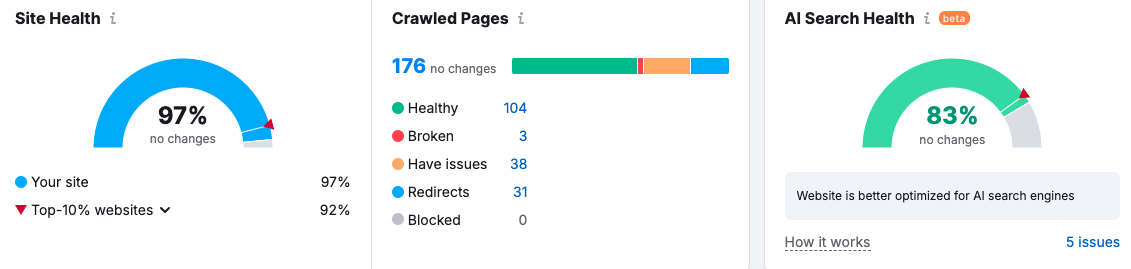
Core Web Vitals are a set of user experience signals introduced by Google and now firmly established as ranking factors. They measure loading performance, interactivity, and visual stability. Poor scores on these metrics harm both your search engine rankings and your overall user experience.
Website speed and page load time sit at the heart of Core Web Vitals performance. Google’s own PageSpeed Insights and Google PageSpeed Insights tools are used to assess loading performance for both desktop and mobile. Given the rise of mobile-first indexing, your site’s performance on mobile devices now carries greater weight than ever before.
Regular audits of your site’s technical foundations are essential. At Peak District SEO, we use Screaming Frog SEO Spider to identify issues affecting indexed pages, crawlability, and the site’s overall health. Issues such as broken links, duplicate content, and slow page load time are all surfaced and prioritised in our technical reports.
6. Engagement Metrics
User engagement metrics reveal how visitors interact with your content once they arrive. Key indicators include engagement rate, average session duration, and exit rate. A high website’s bounce rate combined with low session duration often indicates a mismatch between search intent and page content, or a poor overall user experience.
Google’s algorithms now place significant weight on user behaviour signals. Sites that consistently deliver a strong overall user experience are rewarded with better rankings, whilst sites with higher bounce rates and poor engagement are typically deprioritised over time.
7. Backlinks and Authority Metrics
Backlink metrics measure the quantity, quality, and relevance of links pointing to your site from other domains. Relevant backlinks from authoritative sources pass link equity to your pages, boosting their authority and improving their ability to rank. Conversely, harmful links from low-quality or spammy sites can suppress rankings and damage your brand presence.
Key authority metrics include Domain Rating (from Ahrefs) and page authority (from Moz). These are proxy metrics that estimate the relative strength of a domain or page’s link profile. Whilst they are not official Google metrics, they correlate strongly with organic rankings and are widely used across the industry.
Building quality backlinks through content marketing, digital PR, and strategic outreach remains one of the most impactful SEO activities available. Peak District SEO manages proactive link building as part of our broader search engine optimisation services.
Choosing the Right SEO Metrics for Your Business
Not every metric is equally relevant for every business. A local service provider in the Peak District has different business goals from a national e-commerce retailer. The starting point is always to align your SEO KPIs with your broader business objectives, then work backwards to identify which SEO performance metrics best reflect progress towards those goals.
For example:
- A local business focused on generating enquiries should prioritise organic conversion rate, local search results visibility, and performance on Google Business Profile.
- An e-commerce site should track organic traffic, organic conversion rate, and revenue from organic channels.
- A content publisher should focus on organic impressions, engagement rate, and referral traffic.
Choosing realistic goals and the right performance indicators from the outset prevents wasted effort and ensures your reporting remains focused on meaningful business outcomes rather than vanity metrics.
Tools for Tracking SEO Measurement Metrics
Accurate measurement requires the right tools. Here are the essential platforms used by Peak District SEO and recommended for businesses serious about their search performance:
- Google Analytics: The industry-standard analytics platform for tracking organic traffic, engagement rate, goal completions, and Traffic Acquisition data.
- Google Search Console: The definitive source for keyword rankings, organic impressions, click-through rate, indexing status, and Core Web Vitals data.
- Google PageSpeed Insights: Used to assess loading performance and identify improvements aligned with Core Web Vitals benchmarks.
- Screaming Frog SEO Spider: A powerful crawler for auditing indexed pages, identifying technical issues, and assessing the site’s overall health.
- SEMRUSH : Third-party tools providing detailed backlink metrics, Domain Rating, page authority, and competitor analysis within the competitive landscape.
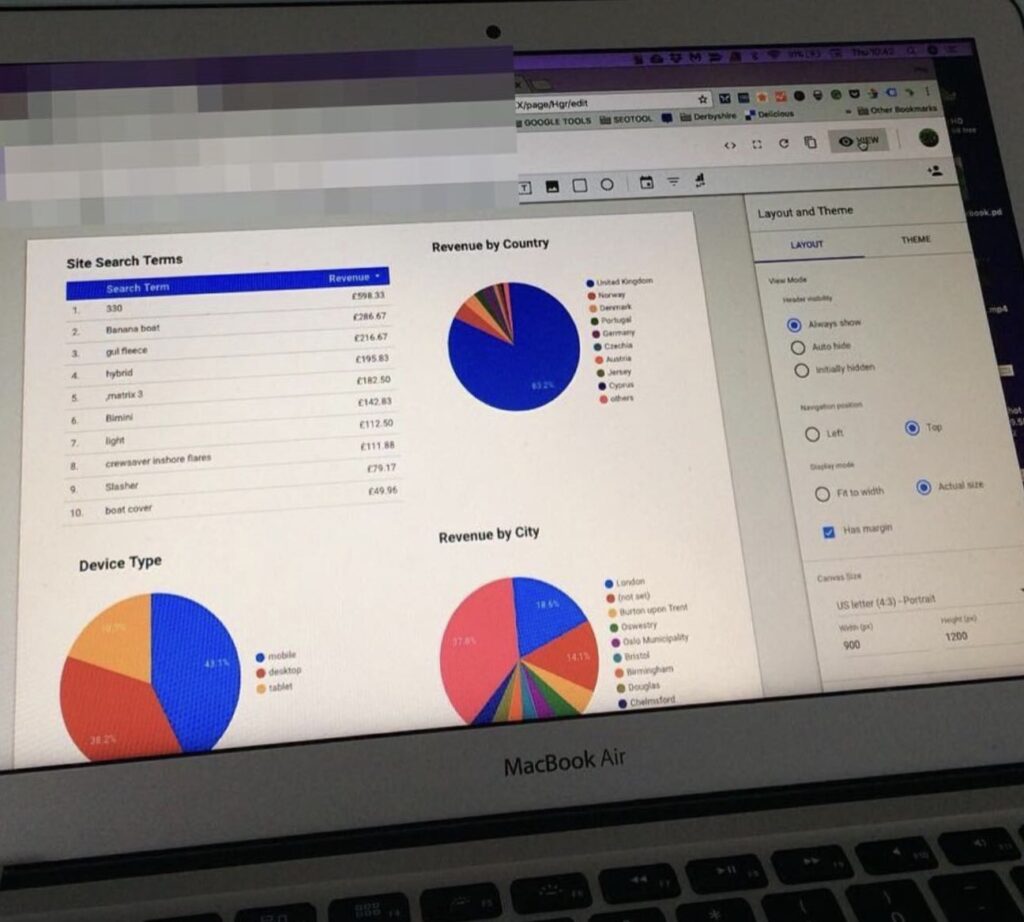
Using a strategic blend of these tools ensures that your SEO monitoring captures both the macro and micro dimensions of your website’s SEO performance. At Peak District SEO, we build custom dashboards that pull data from multiple sources into a single view, making it easy to track your campaign performance at a glance.
How Peak District SEO Focuses on the Metrics That Matter
One of the most common frustrations we hear from new clients is that their previous agency sent them monthly reports filled with data but delivered very little valuable information. Rows of numbers, coloured charts, and industry benchmarks that provided detailed insights into traffic but no clear connection to actual business outcomes.
At Peak District SEO, we have built our entire reporting framework around a single principle: focusing on the metrics that matter. That means stripping away the vanity metrics and concentrating effort on the SEO KPIs that directly reflect real business results.
Our process begins with a thorough discovery session where we learn about your business goals, your target audience, and your current performance. From there, we establish a baseline of your current performance across all key SEO performance metrics and set realistic, measurable targets.
Every report we produce is written in plain English, with clear explanations of what has changed, why it has changed, and what we are doing about it. We do not hide behind jargon or bury important findings in dense tables. Our clients always know exactly where their SEO results stand and what the next steps are.
We go the extra mile, conducting regular audits to catch technical issues before they impact your search performance, proactively monitoring search engine algorithms changes that could affect your organic rankings, and adjusting strategy based on shifts in the competitive landscape.
Frequently Asked Questions About SEO Measurement Metrics
What are the most effective metrics for measuring SEO success?
The most effective SEO metrics for measuring success are those tied directly to your business goals. For most businesses, these include organic traffic, organic conversion rate, keyword rankings for targeted keywords, Core Web Vitals scores, and SEO ROI. These essential SEO metrics collectively show whether your search engine optimisation efforts are generating real business results, not just improving numbers on a dashboard. The key is to set realistic goals upfront and measure progress consistently against those goals.
Can search engine rankings alone accurately reflect the effectiveness of an SEO campaign?
Search engine rankings are an important performance indicator, but they do not tell the full story. A site can achieve strong organic rankings for terms with low search volume and generate very little organic search traffic. Similarly, top-ranking pages with poor click-through rate may attract far fewer visitors than their position suggests. An effective SEO campaign must be measured across a full range of SEO performance metrics, including traffic, conversions, engagement, and authority, rather than relying on traditional rankings alone.
What are Core Web Vitals and why are they important in tracking SEO performance?
Core Web Vitals are a set of three user experience metrics defined by Google: Largest Contentful Paint (LCP), which measures loading performance; Interaction to Next Paint (INP), which measures responsiveness; and Cumulative Layout Shift (CLS), which measures visual stability. These metrics are now official ranking factors within Google’s algorithms. Poor scores on Core Web Vitals directly harm your website’s SEO performance and your overall user experience. Tools such as Google PageSpeed Insights and PageSpeed Insights allow you to assess and improve your scores, and regular audits are strongly recommended to maintain optimal performance.
Which user engagement metrics should be considered when measuring SEO success?
Key user engagement metrics include engagement rate, average session duration, exit rate, and the website’s bounce rate. Together, these metrics reveal how well your content matches the intent of your organic visitors. A high engagement rate paired with low exit rate signals that users are finding what they need and exploring further, which is both a positive business outcome and a signal to Google that your content is valuable. Conversely, higher bounce rates and low session duration can indicate content quality issues or a poor overall user experience, both of which will ultimately suppress your organic rankings.
How do various search engines differ in their measurement metrics?
Various search engines, including Google, Bing, and others, each have their own algorithms, crawling behaviours, and ranking signals. Google remains dominant for most UK businesses, and Google’s algorithms place particular emphasis on Core Web Vitals, mobile-first indexing, and user experience signals. However, different search engines may weight factors differently; Bing, for example, places greater emphasis on social media platforms as a trust signal. For most businesses, Google should be the primary focus, but a well-rounded SEO monitoring programme should at minimum track search visibility and organic search traffic across various search engines to ensure comprehensive online presence.
Improving Your SEO Measurement Metrics: Key Strategies
Optimal SEO performance is not achieved overnight. It is the result of consistent, informed action taken in response to accurate data. Here are the most impactful strategies for improving your SEO performance metrics over time.
Optimise Your Website’s Content
Content remains the foundation of organic search performance. Pages that provide genuinely helpful, authoritative information aligned with search intent are rewarded by Google’s algorithms. Focus on producing content that answers informational queries in depth, incorporates your tracked keywords naturally, and provides valuable information that users cannot easily find elsewhere.
Pay particular attention to your landing pages, as these are typically the entry points for high-intent visitors. Strong meta descriptions and compelling title tags improve your organic click-through rate from Google’s search results without requiring any change in your search engine rankings.
Build Quality Backlinks
Relevant backlinks from authoritative domains remain one of the strongest signals in Google’s algorithms. A proactive approach to link acquisition, through content marketing, digital PR, and partnerships, steadily builds your Domain Rating and page authority. At Peak District SEO, link building is integrated into every SEO strategy we develop, ensuring that link equity flows consistently to the pages that matter most.
Address Technical SEO Issues Promptly
Technical issues are often the silent killers of organic search performance. Pages that are not properly indexed, have slow page load time, or fail Core Web Vitals thresholds will consistently underperform. Regular audits using tools like Screaming Frog SEO Spider identify these issues before they compound. Mobile search performance deserves special attention, given the dominance of mobile-first indexing in Google’s algorithms.
Monitor the Competitive Landscape
Understanding how your competitors perform across key SEO metrics helps identify both threats and opportunities. Tracking shifts in the competitive landscape for your targeted keywords reveals when competitors are gaining ground and when better keyword opportunities emerge. This intelligence should inform regular updates to your winning SEO strategy and content plan.
Why Trust Peak District SEO With Your SEO Monitoring?
At Peak District SEO, our team brings years of hands-on experience managing search engine optimisation services for businesses across a wide range of sectors and sizes. We combine deep technical knowledge with a clear-headed, commercial approach to SEO monitoring.
We follow Google’s own guidelines on helpful content, EEAT (Experience, Expertise, Authoritativeness, and Trustworthiness), and search engine algorithms best practice. Every strategy we build is grounded in data, guided by industry benchmarks, and measured against business goals rather than vanity indicators.
Our clients benefit from transparent reporting, proactive communication, and a genuine commitment to delivering digital success. We do not chase better rankings for their own sake; we pursue measurable growth in traffic, leads, and revenue. That is what a winning SEO strategy looks like in practice, and it is what sets Peak District SEO apart.
Conclusion: Make Your SEO Metrics Work for Your Business
Effective SEO monitoring is not about tracking every metric available. It is about identifying the essential SEO metrics that connect directly to your goals, measuring them consistently, and acting on what the data tells you. From organic search traffic and Core Web Vitals through to SEO ROI and organic conversion rate, every metric you track should have a clear purpose and a clear path to action.
The businesses that achieve lasting digital success are those that treat SEO as an ongoing programme of improvement, not a one-off project. They set realistic goals, conduct regular audits, monitor the competitive landscape, and adapt their strategy as search engine algorithms evolve. They also partner with experts who understand not just the technical dimensions of SEO, but the commercial context in which it operates.
Peak District SEO is here to be that partner. Our expertise in focusing on the metrics that matter means you will always know where you stand, what is working, and what needs to change. We bring together the tools, the knowledge, and the strategic insight to deliver real business results from search.
Ready to focus on the SEO metrics that actually grow your business?
Get in touch with Peak District SEO today and let us build a bespoke measurement strategy around your goals.
Contact Peak District SEO
You may also like:
- Generative Engine Optimisation Services: Future Proofing Search Visibility
- What is EEAT and what does it mean for SEO?
- Why A Website Maintenance Package is Essential
- Google Tag Manager Tags: A Guide to Effective Tag Implementation

I’m Phil Gregory, the MD and founder of Peak District SEO.
I’m an SEO & Google Ads Consultant with 28+ years of experience in I.T and helping UK Businesses improve website performance.
I built my first website in 1998, then I discovered the joys of website optimisation and never looked back.
If you want a no-nonsense, no-hard-sell approach and to actually get your website fixed with a solid, affordable, long-term approach, hit the contact button today.
Peak District SEO is a UK-based Digital Marketing Company.
We help businesses make more money, using traditional Search Engine Optimisation (SEO) , Ai Search / GEO and paid advertising (PPC).
Why Peak District SEO?
27+ years of experience.
80+ 5* reviews on Google
Our customers have hundreds of page one and position 1 rankings, and we can prove it.
We’ve helped hundreds of SMEs in the UK
We have numerous articles published across the web discussing SEO.
We regularly publish case studies about the work we’ve done
Customers trust our service – See our reviews on Google, Trustpilot and Facebook
Our customers have hundreds of page one and position 1 rankings and we can prove it.